Tea history timeline

From the discovery of tea to the spread of global tea culture

Antiquity and legend

(c. 3000 BCE and earlier)

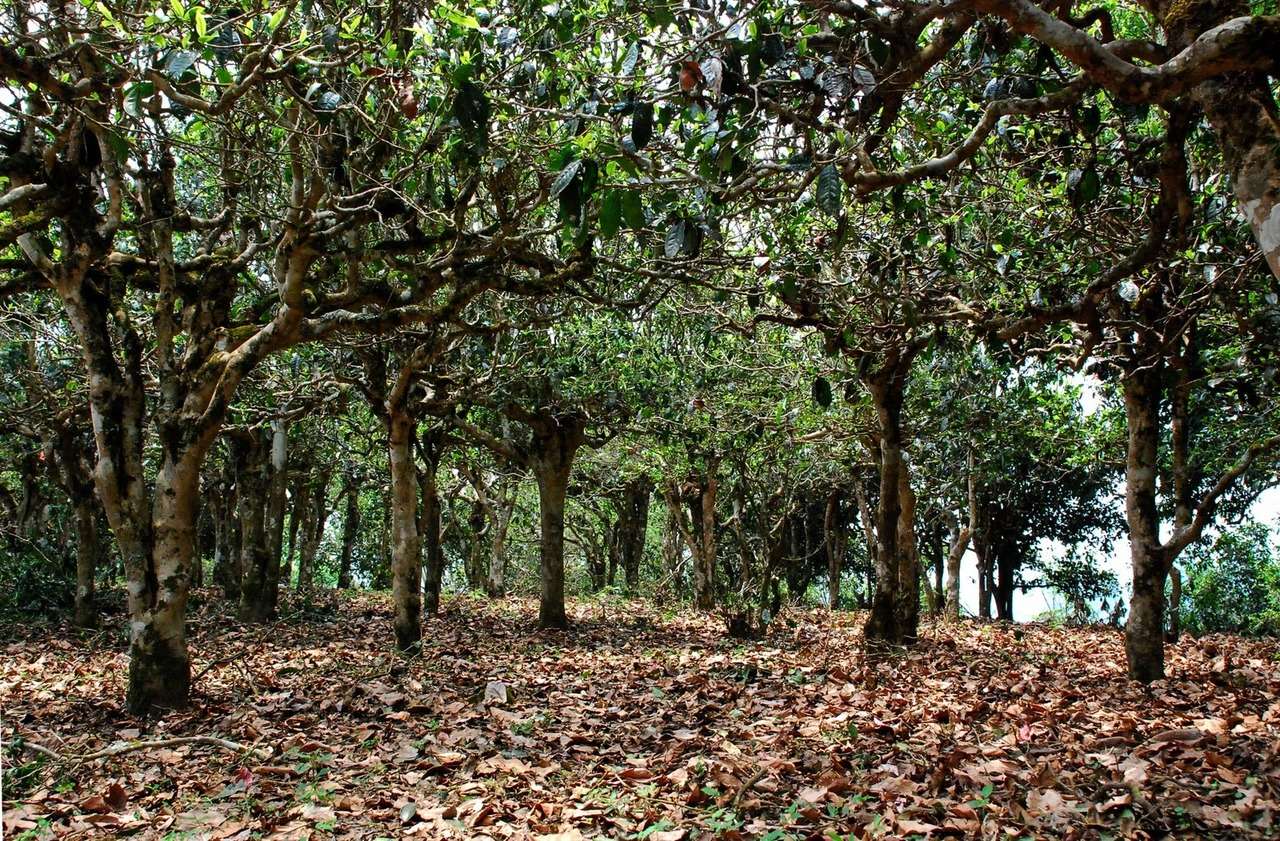
Legend has it that Shennong (c. 5000 years ago) tasted hundreds of herbs in southwestern China and discovered that tea could detoxify. Though unverified, this origin myth is widely told. Botany and archaeology suggest Yunnan, Sichuan, Guizhou, and western Hubei as the wild homeland of the tea plant, where early use began.

References

  • Lu Yu:The Classic of Tea (Chajing), Zhonghua Book Company, 1981.
  • Han Siyan:History of Chinese Tea Culture, Shanghai Culture Publishing House, 1991.
  • Wang Ling:Introduction to Chinese Tea Culture, Fujian People's Publishing House, 2000.
Shang, Zhou to Qin–Han

(c. 11th century BCE – 3rd century CE)

In the Shang and Zhou periods, the Bashu region (today’s Sichuan and Chongqing) showed signs of tea use. Records of the States South of Mount Hua mentions “fragrant tea” as tribute. By the Western Han, tea was bought, sold, and drunk in Sichuan; Wang Bao’s “Contract for a Servant” (59 BCE) records “buying tea at Wuyang.” Tea was still limited to certain regions and social strata.

References

  • Chang Qu:Records of the States South of Mount Hua, Zhonghua Book Company, 1987.
  • Wang Bao:Contract for a Servant, in Complete Han Prose.
  • Chen Wenhua:General History of Chinese Tea, China Agriculture Press, 2005.
Wei, Jin, Northern and Southern Dynasties

(3rd–6th century)

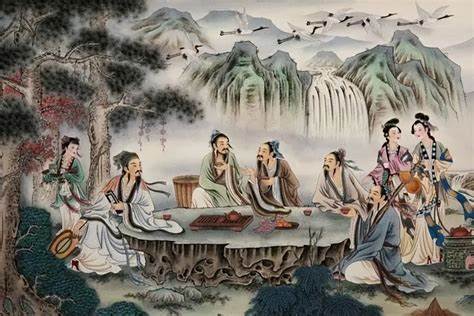
Wei–Jin texts often mention tea as a social drink among literati. In the Northern and Southern Dynasties, tea spread from the elite to the general population and began to appear as an everyday beverage in some areas.

References

  • Liu Yiqing:A New Account of the Tales of the World, Zhonghua Book Company, 1983.
  • Cheng Qikun:Introduction to Tea Culture, China Light Industry Press, 1992.
Sui and Tang

(7th–10th century)

Tea drinking grew under the Sui but remained largely elite. The Tang was the key period for the maturation of Chinese tea culture: tea gardens expanded and processing improved. Lu Yu (733–804) wrote The Classic of Tea, the first systematic work on origins, processing, tasting, utensils, and tea art. Tea travelled along the Silk Road to Central Asia, West Asia, and parts of Europe as a cultural and trade commodity.

References

  • Lu Yu:The Classic of Tea, Zhonghua Book Company, 1981.
  • Feng Yan:Feng’s Record of Hearings, Zhonghua Book Company, 1986.
  • Ming Wilson:"Chinese Tea Culture: A Brief Introduction," Victoria and Albert Museum Archives.
Song dynasty

(10th–13th century)

Song tea culture reached its zenith: tea was a daily necessity from court to commoners. Tea competitions (doucha) judged quality and brewing skill. Famous kilns produced fine tea wares. Teahouses flourished and tea became a central part of social life.

References

  • Emperor Huizong (Zhao Ji):Treatise on Tea in the Daguan Era, Shanghai Ancient Books Publishing House, 1980.
  • Lin Yutang:The Importance of Living, 1937; Chinese edition by Commercial Press.
Yuan dynasty

(13th–14th century)

Tea production and trade continued under the Yuan; the “Ten Thousand Li Tea Road” linked northern and southern producing and trading centres and fostered cultural exchange. Tea became a major economic commodity, paving the way for Ming–Qing tea trade.

References

  • Zhou Feng:The Silk Road and the Tea-Horse Road, Nationalities Publishing House, 1993.
  • Denis Twitchett & Herbert Franke:The Cambridge History of China: Volume 6: Alien Regimes and Border States, 907–1368, Cambridge University Press, 1994.
Ming dynasty

(14th–17th century)

The Ming saw the systematisation of tea studies and the stabilisation of the six major tea types. Emperors promoted loose tea over compressed cakes, accelerating the spread of green and loose tea. Yixing teapots and porcelain shaped new brewing practices.

References

  • Xu Wei:Tea Notes, in Complete Works of Xu Wenchang.
  • Huang Yinong:Studies on Ming Tea, Zhonghua Book Company, 2009.
  • Joseph Needham:Science and Civilisation in China, Vol. 6: Biology and Biological Technology, Cambridge University Press.
Qing dynasty

(17th–early 20th century)

Tea became a pillar of the Qing economy and a major export alongside silk and porcelain. Domestically, teahouse culture thrived; abroad, tea reached Southeast Asia, South Asia, the Middle East, East Africa, and Europe via maritime routes, shaping British and French tea customs and the global tea trade.

References

  • Draft Qing History:Zhonghua Book Company edition.
  • Kimura Kengi:History of Tea in East Asia, Tokyo University Press, 1998 (English–Japanese).
Modern era

(mid-19th–early 20th century)

China’s political and economic order and international trade were reshaped. After the Opium Wars, colonial powers spread Chinese tea plants and processing to India, Sri Lanka, and elsewhere, creating new global production centres. Chinese tea faced competition and domestic upheaval but remained influential in world markets.

References

  • Han Siyan:History of Chinese Tea Foreign Trade, China Commerce Press, 1989.
  • Robert Gardella:Harvesting Mountains: Fujian and the China Tea Trade, 1757–1937, University of California Press, 1994.
The development of Chinese tea spans thousands of years. From early discovery to the cultural flourishing of the Tang and Song, to the refinement and global spread of the Ming and Qing, tea has been central to China's economy, trade, and way of life. Today, Chinese tea culture continues to influence tea drinking around the world.

Inheriting ancient tea craft
Savoring natural tea aroma

Quick Links